

The digital age has brought many ways to easily send and receive documents, images, and other information. Emailing, direct messaging, and cloud data storage are all examples of methods to transport documents over the web. With this comes the question: Are faxes still used in 2026? And why do people fax things?
Why Is Faxing Still Used?
Yes, people still use fax machines to send and receive documents. Faxes still use telephone lines to send information via a fax machine, but it is possible to send and receive faxes with a computer, no fax machine required.
Faxing and Security
When comparing faxing versus emailing, some people feel that faxes are somewhat more secure and safe than digital transmissions. Because of how secure faxing is during the transmission process, some institutions, industries, and businesses prefer faxing for its simplicity and security. The information within a fax is communicated over phone lines and converted to document format, to help prevent sending malware or dangerous information. But you can inadvertently attach viruses, malware, and suspicious links to an email. That said, a fax sitting on a fax machine can easily fall into the wrong hands.
Tracking Faxed Documents
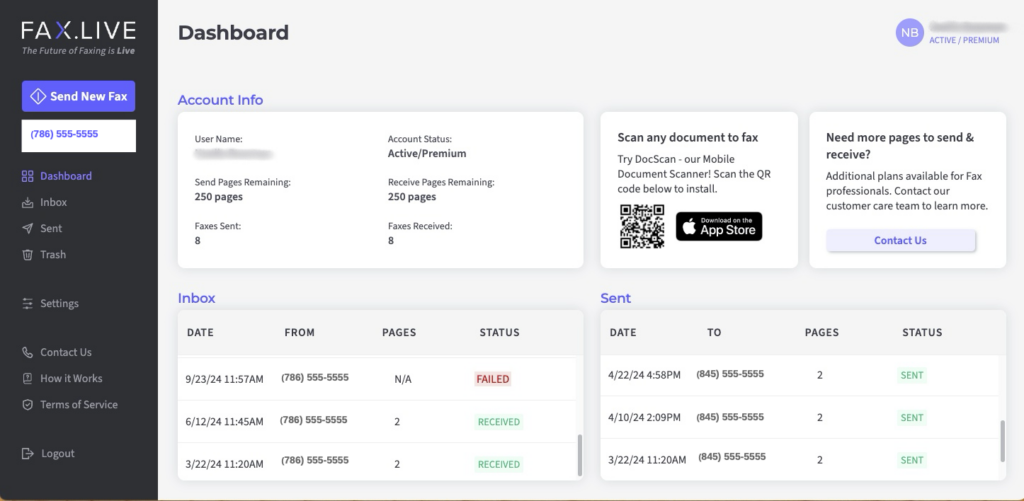
With online faxing, it is easy to track faxed documents, as they go directly to a fax machine for physical processing rather than email inbox or, worse, junk email folders. With Fax.Live, for example, we store received and sent faxes indefinitely — until our users delete them or cancel their accounts. Through your online dashboard, you’ll be able to easily access your sent and received faxes indefinitely, as long as your Fax.Live account is active.
Fax.Live offers a free built-in cover page so your recipient can quickly and easily identify who sent the fax and who the intended recipient is so it can go to the right person. A confidential cover sheet does not guarantee privacy, nor is it a legally binding disclaimer. Read more about this in “Confidential Fax Cover Sheets.”
Faxing and Privacy
Faxes are very difficult to intercept while they’re being transmitted, and, unless a line is busy, you’re almost guaranteed that your document will safely arrive at the recipient’s fax machine.
Again, this is not to imply that after a fax has been received and printed, it couldn’t fall into the wrong hands. A fax machine that is in a shared workspace, for example, is accessible to anyone who has authority to be in the shared workspace.
But, when asked why faxing still exists, some sources will cite privacy as a motivator for faxing information.
Legal Requirements and Faxing
Official documents like lease agreements, job applications, and financial documents may require signatures from several parties. Although there are digital ways to create electronic signatures that are legally binding, some require parties to physically sign a document, fax the signed document to other parties. Learn about Fax.Live’s fax signature feature. Always consult a licensed attorney to determine whether faxed signatures are appropriate for your specific situation and comply with applicable laws.
History (Change Is Hard!)
Although it may seem silly, some industries have used faxing for decades. They’ve gotten used to fax machines being part of their daily routine, and it’s the standard, easiest way to send and receive documents. Although rare, switching to a new method would complicate the system; if it isn’t broken, why fix it?
Convenience of Faxing
Some organizations, like newspapers, still use fax machines for receiving news alerts and press releases. Public relations firms issue press releases online as well as via fax, knowing that email addresses change and editors and journalists come and go. A fax sent to a newsroom, rather than or in addition to emails sent to staff, may have a better chance of being read.
Who Still Faxes?
While many businesses have shifted to online faxing, several industries and organizations still use fax machines:
- Doctor’s offices and hospitals
- Insurance companies
- Law firms
- Universities and colleges
- Government entities
- Real estate businesses
These industries usually have at least one fax machine set up in their offices that’s connected to a dedicated telephone line. Individuals may still have fax machines in their homes, especially if they have a landline connection.
Many healthcare businesses require medical records to be sent via fax to comply with privacy regulations. A doctor’s office sending medical transcripts to a hospital might have to use a fax machine or postal delivery to help protect patient privacy.
Are Fax Machines Still Used?
Large organizations may still use traditional fax machines. It’s convenient for them to have a central fax machine that can receive and send faxes. They’ll typically put the fax machine in a central location within the office so it’s easy to send and receive information for anyone who needs it.
For the average person, having a fax machine is rare. If they work from home in one of the above industries, it’s possible they have a fax machine, but many homes these days don’t even have a landline telephone! Fun fact: Fun fact: About 78% of Americans live in homes without landlines in 2026, compared to 5% in 2003 (source: NumberBarn).
Fortunately, it’s possible to send and receive electronic faxes with a computer using a digital fax service like Fax.Live. If you have to send a document via fax, this can be the best hassle-free option for you.
With Fax.Live, you can fax from your computer or fax from a smartphone. If you have to send a fax, this is the best hassle-free option.
Why Fax Instead of Email?
We cover this in more depth in a separate article about fax vs. email, but the important things to know are:
- Faxing has more network security while it’s in transit.
- Official organizations (like HIPAA) require you to fax documents, although this is changing.
- Malware files can’t be sent over fax.
- Faxes don’t rely on an internet connection, which can experience interruptions. Landlines aren’t impervious to interruptions, but they tend to be less vulnerable than DSL internet connections.
- Email can be messy for businesses, with inboxes filling up with dozens of messages by the hour! Faxes can be easier to identify and sort.
Of course, this isn’t accounting for the convenience factor. Faxing can be inconvenient, especially if you have to scan and fax a document and don’t have a fax machine. Normally, you’d have to go to a library, an office supply store, or somewhere else that has a fax machine.
Fortunately, digital fax services like Fax.Live enable faxing via your computer or smartphone, so you can fax without a fax machine. Try it for free with Fax.Live.
Why Does Fax Still Exist?
The simplicity of faxes is the major factor. Although most people use cell phones, the United States has a telephone network spread throughout all 50 states that’s convenient for fax machines to communicate through. Before the internet, this was the closest thing people had to instantaneous communication of visual documents.
Faxing still uses telephone networks to send documents and as long as the phone network exists, faxing may be here to stay.
ID 1159677 | Radoslaw Kostka | Dreamstime.com